
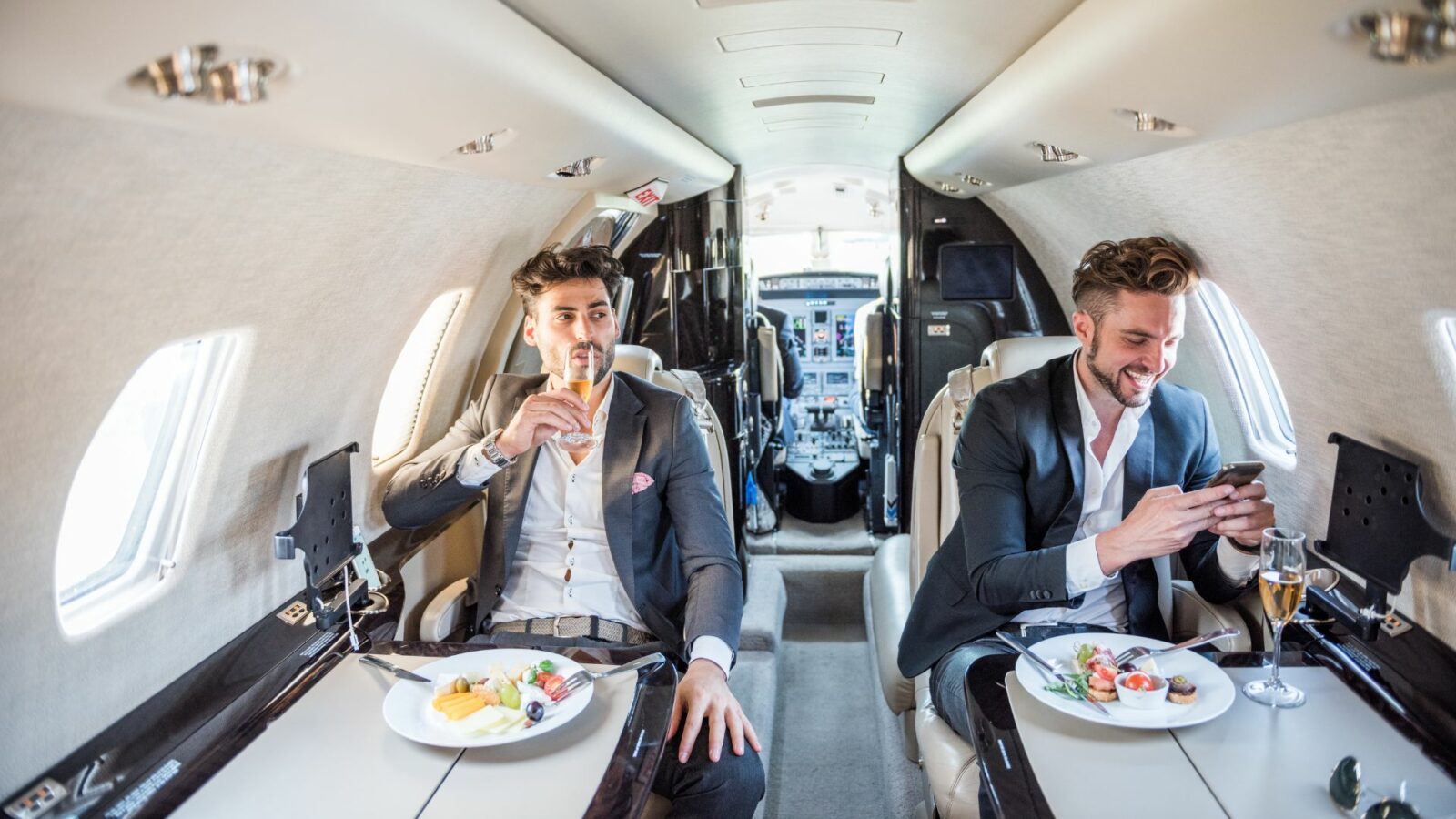
Luxury catering on private jets brings restaurant-quality food to a small galley at 40,000 feet. This guide explains how caterers, chefs, and flight attendants deliver gourmet dining in the air for clients who expect the very best.
1. The Art of Menu Planning
Good in-flight dining starts with careful menu planning. Chefs consider the client’s preferences and dietary needs, the equipment available in the aircraft’s galley, and the way altitude affects taste and digestion. Menus are usually tailored to each trip and built around fresh, seasonal, and often local ingredients. Dishes that reheat well, such as braises, roasted fish, and composed salads, tend to travel better than delicate fried food.
2. Overcoming Altitude Challenges
In a pressurized cabin, dry air and lower pressure dull our senses of taste and smell, especially for salt and sweetness. To make up for it, chefs season with care rather than simply adding more salt. Bold spices, well-balanced sauces, citrus, and fresh herbs keep dishes vibrant without overpowering them. Savory, umami-rich ingredients such as tomatoes, mushrooms, and aged cheeses also hold their flavor well at altitude.
3. Culinary Expertise in a Compact Space
A jet’s galley is small, and there is no open flame. Most meals are prepared on the ground by a specialist caterer, then finished on board in convection ovens or warmers. Chefs who work in this field plan each dish around those limits, so it can be reheated, plated, and served in a tight space without losing quality.
4. Presentation and Service
Presentation matters as much in the air as on the ground. Meals are plated with the same care you would expect in a fine restaurant, on proper china with real glassware and linen. Flight attendants on larger jets are often trained in fine-dining service, so they can present each course, suggest wine pairings, and serve with quiet attention.
5. Health and Safety Standards
Food safety is critical in the air, where there is no option to send a dish back to the kitchen. Aviation caterers follow strict food safety procedures. They source fresh ingredients from trusted suppliers, keep food at safe temperatures from kitchen to aircraft, and follow strict hygiene rules during preparation and service. Allergens are labeled clearly, and many operators avoid serving the same dish to both pilots to reduce the risk of food poisoning in the cockpit.
6. Customization and Flexibility
Customization is the hallmark of private jet catering. Caterers work closely with clients, their assistants, or the flight crew to shape the menu around specific tastes, dietary restrictions, and even the purpose of the trip, from a business breakfast to a celebration dinner. Favorite dishes from a particular restaurant can often be sourced and delivered to the aircraft.
7. The Importance of Wine and Beverages
Fine wine and premium drinks complete the experience. Sommeliers choose wines that complement the menu and taste good in a pressurized cabin, where dry air can make tannic or acidic wines seem harsher. Fruit-forward wines and quality champagne tend to show best at altitude.
8. Sustainability and Ethics
Clients increasingly care about where their food comes from. Many caterers now offer sustainably sourced seafood, organic produce, and ethically raised meat. They also work to reduce food waste, for example by ordering portions more precisely, and use more eco-friendly packaging.
Luxury catering on private jets combines culinary skill, careful planning, and excellent service. Done well, it turns a meal at altitude into one of the highlights of the trip.