
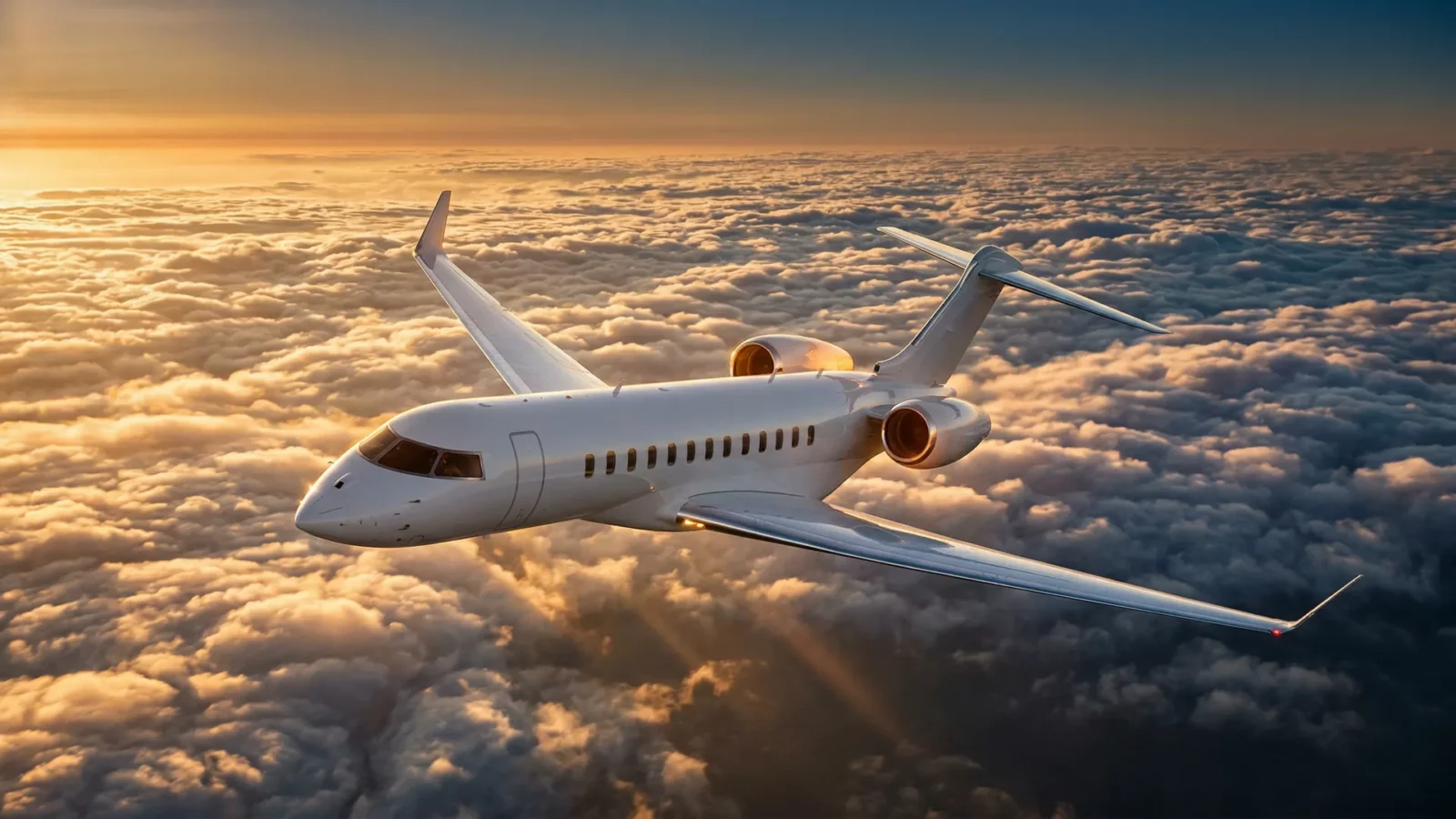
When the Super Bowl rolls into town, private aviation goes into overdrive. FBOs fill up weeks in advance. Ramp space becomes a negotiation. And somewhere in the middle of it all, a Bombardier Global 7500 bearing the Carter family’s travel arrangements touches down, quietly reminding everyone what the very top of the market looks like. Jay-Z and Beyoncé have used their aircraft publicly enough that it barely makes headlines anymore. But the jet itself still deserves a proper look. Because at $80 million, this isn’t just a status symbol. It’s one of the most capable aircraft flying today.
Why the Global 7500 Sits at the Top
Bombardier spent years developing the Global 7500 to take on Gulfstream’s long-range dominance. The result landed in 2018, and it made a serious statement. The aircraft carries a range of 7,700 nautical miles, enough to fly nonstop from Los Angeles to Singapore without a fuel stop. That kind of reach changes how you think about travel. New York to Dubai. Los Angeles to London. Routes that commercial airlines connect through hubs become single-leg journeys.
The cruising speed hits Mach 0.925, placing it among the fastest purpose-built business jets in the sky. For context, most ultra-long-range jets cruise comfortably around Mach 0.85 to 0.87. That extra speed adds up on a twelve-hour flight. You arrive meaningfully earlier, and the jet burns through airspace before fatigue has a chance to settle in.
The Cabin That Changed the Conversation
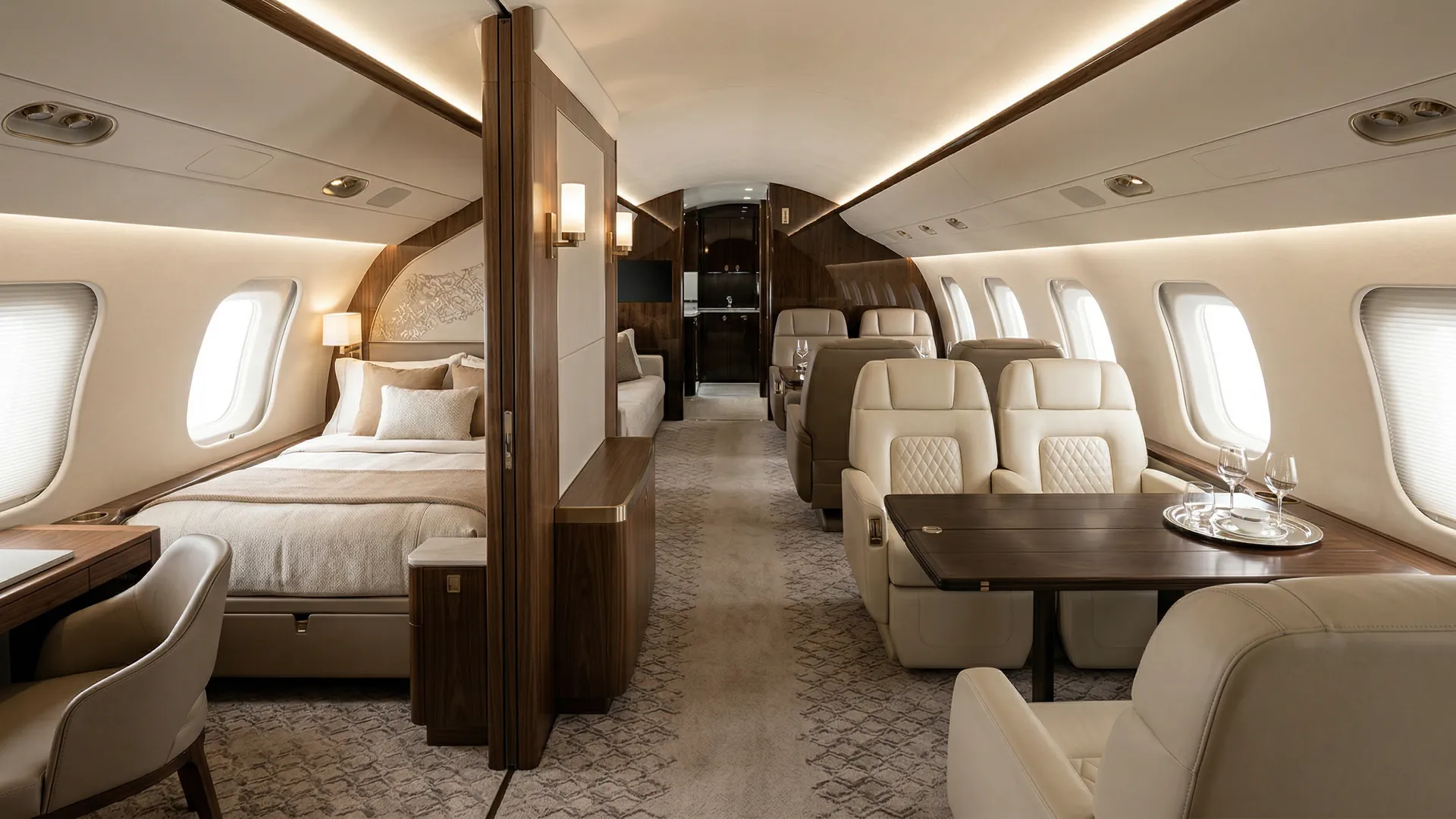
Range and speed matter. But for someone like Beyoncé, who uses this aircraft as a working and living environment during tours and press runs, the interior matters just as much. The Global 7500 offers four dedicated living spaces in its standard configuration. A main cabin, a dining area, an entertainment zone, and a private suite at the rear. That rear suite includes a full-size bed, a dedicated closet, and an actual door that closes. It’s a distinction that sounds minor until you’ve tried to sleep in an aircraft without one.
Bombardier builds the Global 7500’s cabin wider than its competitors in the ultra-long-range category. The interior measures 8.2 feet wide and 6.2 feet tall. You can stand straight. You can walk past someone without turning sideways. These things sound obvious, but they’re not universal even in aircraft that cost tens of millions. Custom completions, which the Carters almost certainly commissioned, can push the total project cost well beyond the base airframe price. Think bespoke furniture, curated materials, integrated entertainment and connectivity systems built specifically for how the owners travel.
The Technology Inside the Cabin: Soleil, l’Opéra, and Nuage
This is where the Global 7500’s $80 million price tag stops feeling abstract. Bombardier didn’t just build a large, fast aircraft — they engineered a specific sensory environment that justifies every dollar for those who spend dozens of hours a month at altitude.
The Soleil lighting system is a core piece of that case. Developed in partnership with lighting specialists, Soleil is Bombardier’s proprietary circadian rhythm lighting technology. It adjusts the cabin’s color temperature and intensity dynamically throughout a flight, mimicking natural daylight cycles to help passengers regulate their internal clocks across time zones. On a fourteen-hour flight from New York to Hong Kong, the difference between landing rested and landing wrecked often comes down to how well your body has been guided through the transition. Soleil works subtly — passengers aren’t aware of it operating — but the effect on arrival fatigue is measurable. For performers, executives, and athletes who can’t afford a recovery day at the far end of a long-haul journey, this system isn’t a luxury feature. It’s a performance tool.
The l’Opéra audio suite addresses the other invisible element that defines long-flight quality: sound. Bombardier collaborated with acoustics engineers to create a cabin sound environment that suppresses engine and airframe noise while delivering high-fidelity audio through strategically placed speakers integrated directly into the cabin architecture. The system isn’t bolted on as an afterthought — it’s built into the walls and ceiling during completion, meaning the acoustic tuning is specific to the aircraft’s geometry. The result is a cabin that is both quieter at rest and more immersive when music or film is playing. For an artist who likely has strong opinions about how her music sounds in any room, this matters in ways a standard inflight entertainment system never could.
Then there’s Nuage seating — Bombardier’s proprietary seat design developed specifically for the Global 7500. Nuage, French for cloud, was engineered in collaboration with ergonomics experts to recline into a near-flat sleep position while maintaining lumbar and lateral support. The seat’s foam compound and fabric selection were both chosen specifically for long-duration comfort rather than showroom appearance. In a category where competitors still install modified premium automotive or yacht seating, Nuage represents a dedicated aviation-first approach to the passenger body over twelve or more hours. Combined with the Soleil lighting environment and near-silent cabin acoustics from l’Opéra, these systems work as an integrated package — every environmental variable managed so the people on board arrive ready to perform.
What the Super Bowl Spotlighting Actually Tells Us
The real story isn’t the celebrity angle. It’s what the Global 7500’s repeated appearances at high-profile events say about how ultra-high-net-worth individuals actually use their aircraft. The Super Bowl draws private jets the way Monaco draws yachts. San Francisco Bay Area FBOs like Signature Aviation at SFO and various general aviation airports around the region see an influx that tests their parking capacity every year the game comes to a major market.
Operating this aircraft isn’t simple. The Global 7500 requires a type-rated crew, typically a captain and first officer both current on type. Crewing, maintenance, insurance, and hangar fees for an aircraft in this category typically run $3 to $5 million annually before fuel. A transcon flight from Los Angeles to New York burns roughly 800 to 1,000 gallons of Jet-A each way. The economics only make sense if you’re flying enough hours and need the range. For the Carters, who have maintained multiple global tours across multiple continents, the utilization truly justifies every dollar.
How It Compares to Its Only Real Rival
The Gulfstream G700 is the Global 7500’s primary competition, and the rivalry is genuine. Gulfstream’s flagship slightly edges out the Bombardier on cabin air pressure, window size, and — following a 2023 specification update — official range, with the G700 now certified at 7,750 nautical miles against the Global 7500’s 7,700. Where the Global 7500 answers back is in cabin philosophy: its industry-first four-zone layout, Nuage seating, Soleil lighting, and l’Opéra audio suite make a coherent argument that the better question isn’t how far you can fly, but how you feel when you get there.
At this level, list prices for both airframes oscillate between $75 and $85 million. Technology-wise, the battle is fought between Bombardier’s Vision flight deck and Gulfstream’s Symmetry system — a choice that often comes down to pilot preference or fleet commonality rather than meaningful capability differences. Choosing between these two aircraft ultimately comes down to which cabin philosophy resonates, what completion options the buyer wants to execute, and in many cases, which manufacturer relationship the buyer already has.
What’s notable is that the celebrity market at this level has largely settled on one of these two aircraft. The days of modified Boeing 767s or 747 VIP conversions as the ultimate statement have given way to purpose-built business jets that offer better efficiency, lower operating costs relative to size, and more flexible routing options. An ultra-long-range business jet can use smaller airports that would never accommodate a widebody commercial derivative. That flexibility — quiet arrivals at regional airports, avoiding the congestion at major hubs — is a significant operational advantage.
What This Means If You’re Considering the Market
Most readers won’t be shopping for an $80 million jet. But the Global 7500’s feature set does trickle down into how the charter and fractional markets position their premium offerings. VistaJet, which operates one of the world’s largest Global series fleets, brings this exact aircraft to clients who need transatlantic or transpacific range without full ownership. Their Global 7500 program puts you in essentially the same cabin — Soleil lighting, l’Opéra audio, Nuage seating — at a fraction of the capital commitment.
Fractional programs through Flexjet also offer Global 7500 access with an ownership share structure. For someone flying 200 or more hours annually on international routes, fractional in this category starts making real financial sense. You get guaranteed availability, crew management handled externally, and access to a specific aircraft type without the fixed cost burden of sole ownership.
Jay-Z and Beyoncé’s Global 7500 is genuinely one of the finest aircraft in private aviation. But the most forward-looking part of this story isn’t who owns it today — it’s where the category is heading. Bombardier’s forthcoming Global 8000, slated to reclaim the title of world’s longest-range business jet with a certified range north of 8,000 nautical miles, signals that this arms race is far from over. For high-performers who measure competitive advantage in time recovered and productive hours protected, ultra-long-range aviation is no longer about status. It’s about time equity — and the Global 7500 may be the clearest expression of that idea currently flying.