
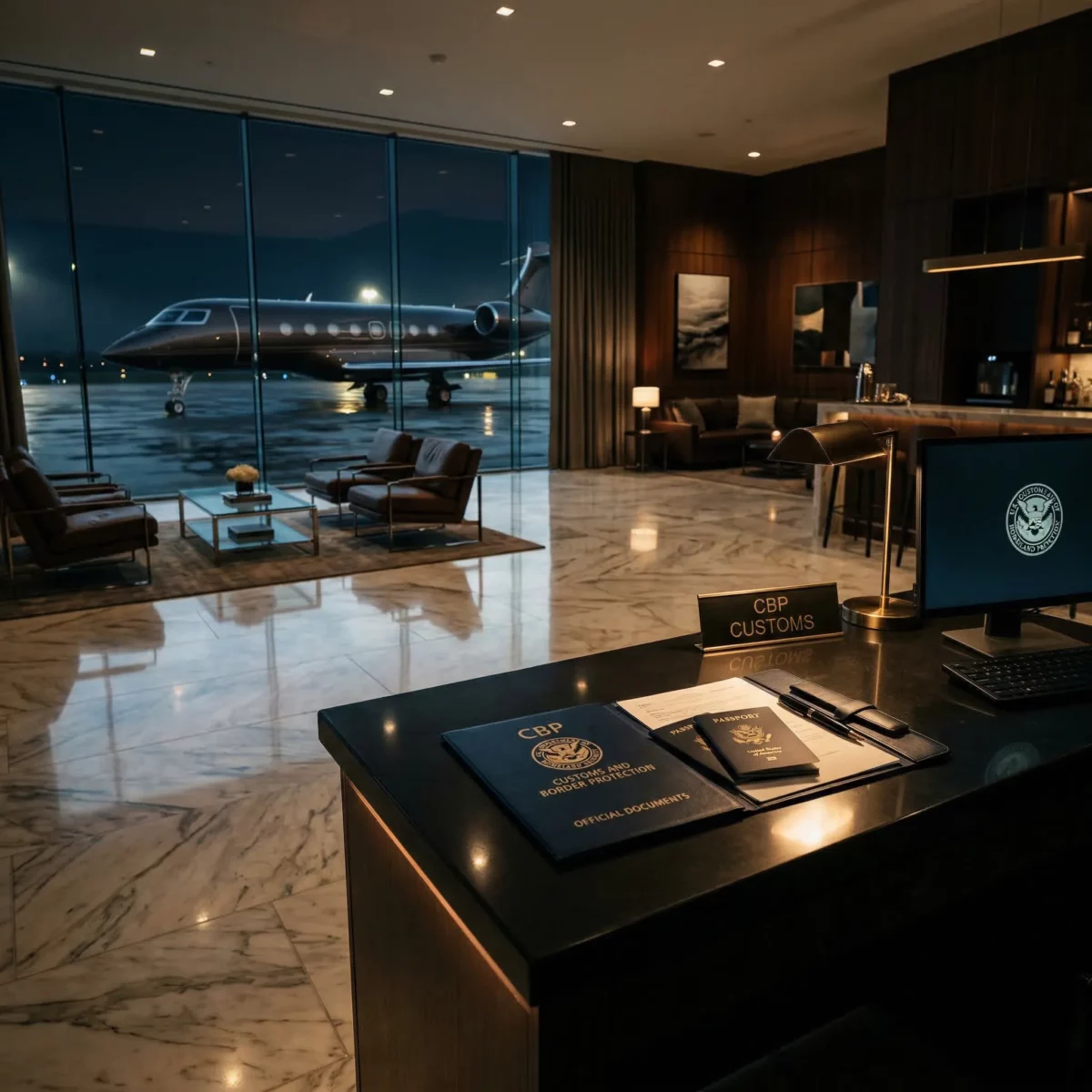
You’ve just touched down from London. The crew opens the door, warm air rushes in, and your ground transport is waiting on the ramp, maybe 50 feet away. But before you can walk toward it, a U.S. Customs and Border Protection officer steps aboard. Documents come out. Questions get asked. And then, almost immediately, you’re cleared. No terminal. No baggage claim conveyor. No line stretching around the corner.
That’s the private aviation customs experience at its best. But it doesn’t always work that way, and understanding why makes you a smarter traveler and a better advocate for your own time.
What Actually Happens When You Land Internationally
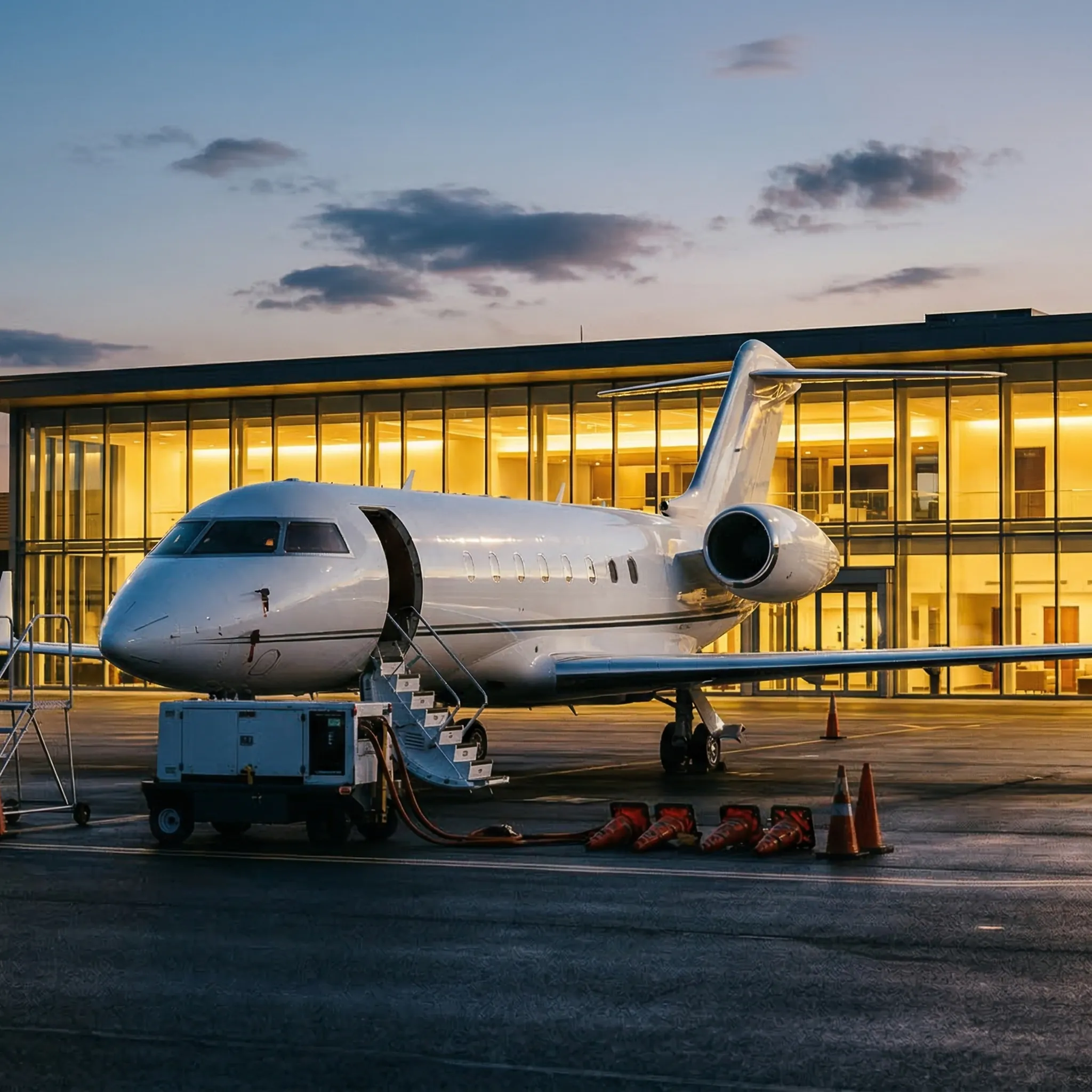
When a private aircraft arrives from an international destination, CBP must clear the passengers and crew before anyone leaves. The method of that clearance depends entirely on where you’ve landed and what type of customs authorization that airport holds.
Most international arrivals at private terminals involve a dedicated CBP officer who comes directly to the FBO. The crew notifies CBP through a system called eAPIS (Electronic Advance Passenger Information System) at least 60 minutes before arrival for U.S.-bound flights. That manifest includes every passenger and crew member’s passport information. By the time the aircraft parks, CBP often already knows who’s on board.
The officer boards or meets passengers at the aircraft, collects passports, asks a few standard questions, and clears the flight on-site. For most private arrivals, this takes 10 to 20 minutes. Your car is waiting when it’s done.
User Fee Airports vs. Landing Rights Airports
Here’s where it gets interesting, and where a lot of travelers get surprised.
Not every airport can legally clear an international private flight. There are two categories that affect how your arrival gets handled.
User Fee Airports
User Fee Airports are private or general aviation airports where CBP services get funded by fees paid by the operators and FBOs rather than the federal government. These airports have negotiated agreements to provide customs inspections on-site. Think of it as a private customs service, available because someone at the local level decided to make the investment.
If you’re arriving at a User Fee Airport, CBP comes to you. The experience is typically clean and efficient. The officer arrives at the FBO, clears you at or near the aircraft, and you’re on your way. Westchester County Airport (KHPN) in New York and Van Nuys Airport (KVNY) in California operate this way, which is a big part of why they’re so popular with private travelers inbound from Europe and Mexico.
Landing Rights Airports
Landing Rights Airports are federally designated facilities where CBP maintains a full-time presence. These are typically larger commercial airports with international terminals. The authorization to land at these airports comes from CBP itself, and private aircraft must request it in advance through a Landing Rights Application.
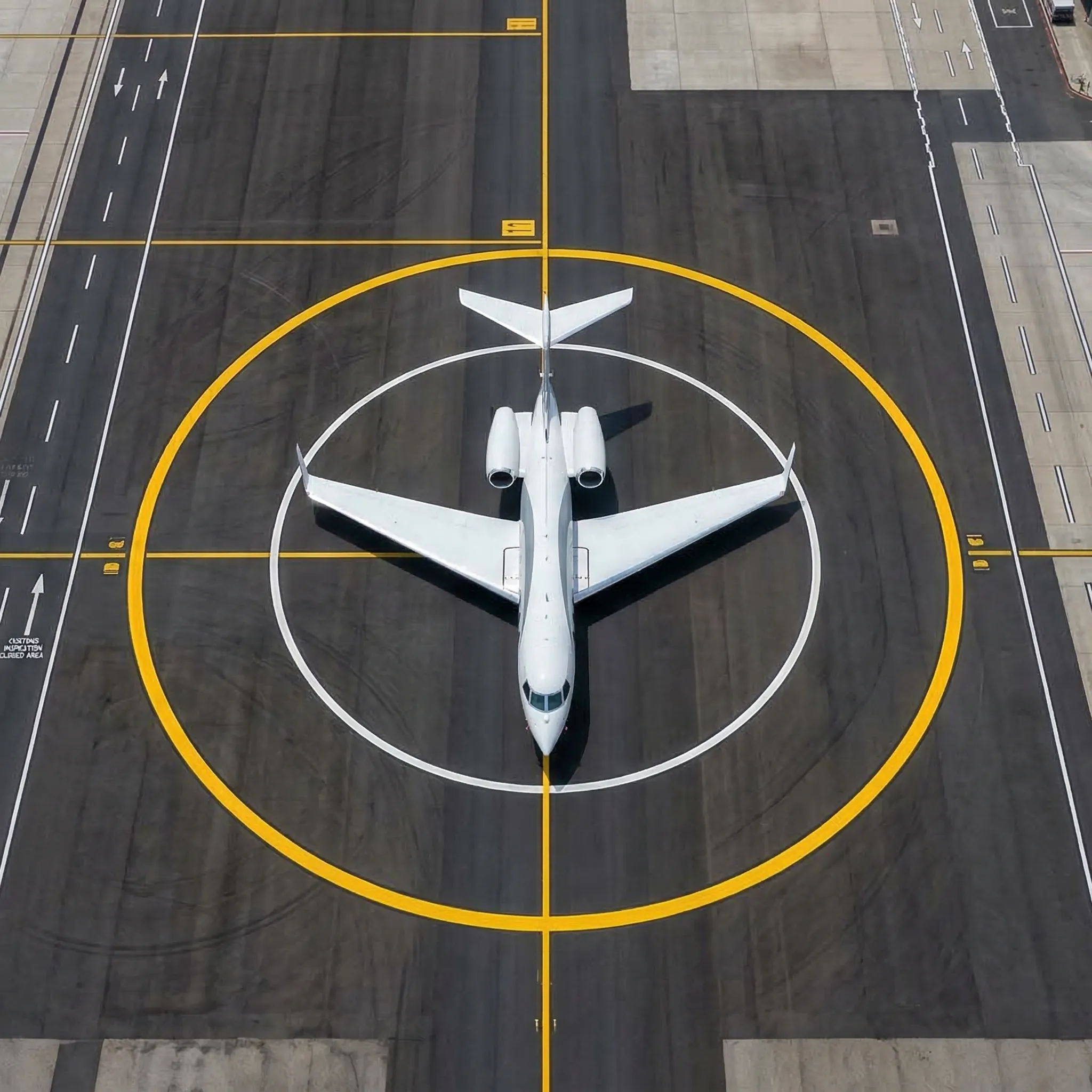
At these airports, the experience can feel more like commercial travel. Depending on the facility, you might be directed to a specific area—sometimes called a Customs Circle or customs annex—rather than cleared directly at the FBO ramp. Standard procedure requires the aircraft to taxi to a designated inspection point where passengers deplane and clear customs in a dedicated annex, only then meeting their ground transport for the final leg of the journey.
The Customs Circle: What It Is and Why It Exists
If you’ve ever heard a pilot or FBO coordinator mention the Customs Circle, this is what they mean: a specific ground location, often a painted circle or designated ramp area, where international arrivals must park for inspection before proceeding to the general aviation terminal.
The Customs Circle exists because CBP needs a controlled inspection environment. Not every FBO is set up to handle customs clearance in its main lobby. The circle gives officers a predictable location where they can board, inspect, and clear aircraft without mixing international and domestic traffic.
It’s not a hardship, but it does add time. Plan for an extra 15 to 30 minutes compared to a domestic arrival at the same airport. Your ground transport needs to know to meet you after clearance, not at the ramp. Your FBO coordinator should handle this coordination automatically, but it’s worth confirming before you land.
Global Entry and How It Changes Your Experience
Here’s a detail that surprises many first-time private international travelers: Global Entry applies to private aviation arrivals, not just commercial flights.
Global Entry members can benefit from expedited clearance even when arriving on a charter or private aircraft. The CBP officer still has to meet the plane, but the interview process moves faster for enrolled passengers. However, this is contingent on the CBP officer carrying a mobile processing device (tablet) or the FBO having a designated Global Entry kiosk—availability varies by airport, which is a common source of frustration for travelers expecting a seamless ramp-side experience. If you’re traveling with a group, having some passengers enrolled and others not can create a mismatch. CBP clears the flight as a group, so the clearance speed defaults to the slowest passport in the cabin.
The practical takeaway: if you fly internationally more than a few times a year on private aircraft, getting your whole regular travel party enrolled in Global Entry is worth the effort. The $100 enrollment fee is a rounding error compared to a single private flight cost.
What Your FBO Handles vs. What You Need to Know
A good FBO manages most of this for you. They coordinate with the charter operator or aircraft management company to confirm that the eAPIS manifest gets filed correctly. They know the local CBP office hours, important because some smaller User Fee Airports only have inspection availability during certain hours. They also know whether a Customs Circle is required or whether the officer will come to the aircraft at the regular parking spot.
What you need to know: carry a valid passport for every international flight, including flights within certain regions where passport cards might seem sufficient. Have the crew or your broker confirm that the arrival airport is authorized for international arrivals before you book. Some airports require advance notice of 24 to 48 hours for a CBP officer to be scheduled. Booking a last-minute international itinerary into a smaller User Fee Airport without that lead time can create real logistical problems.
Private aviation customs clearance is one of the genuine privileges of flying this way. Understanding the mechanics behind it means fewer surprises and a smoother experience every time you cross a border.