

If you own a Dassault Falcon 7X, you already know the aircraft is one of the finest long-range jets ever built. What you might be less excited about is what happens roughly every six years: the C-check. It’s the most intensive scheduled maintenance event in the aircraft’s life, and for operators based in the Southern Hemisphere, it has historically meant shipping the jet to Europe or North America and watching the calendar for weeks. ExecuJet MRO Services just changed that equation with a significant investment in Sydney.

What Actually Happens During a C-Check
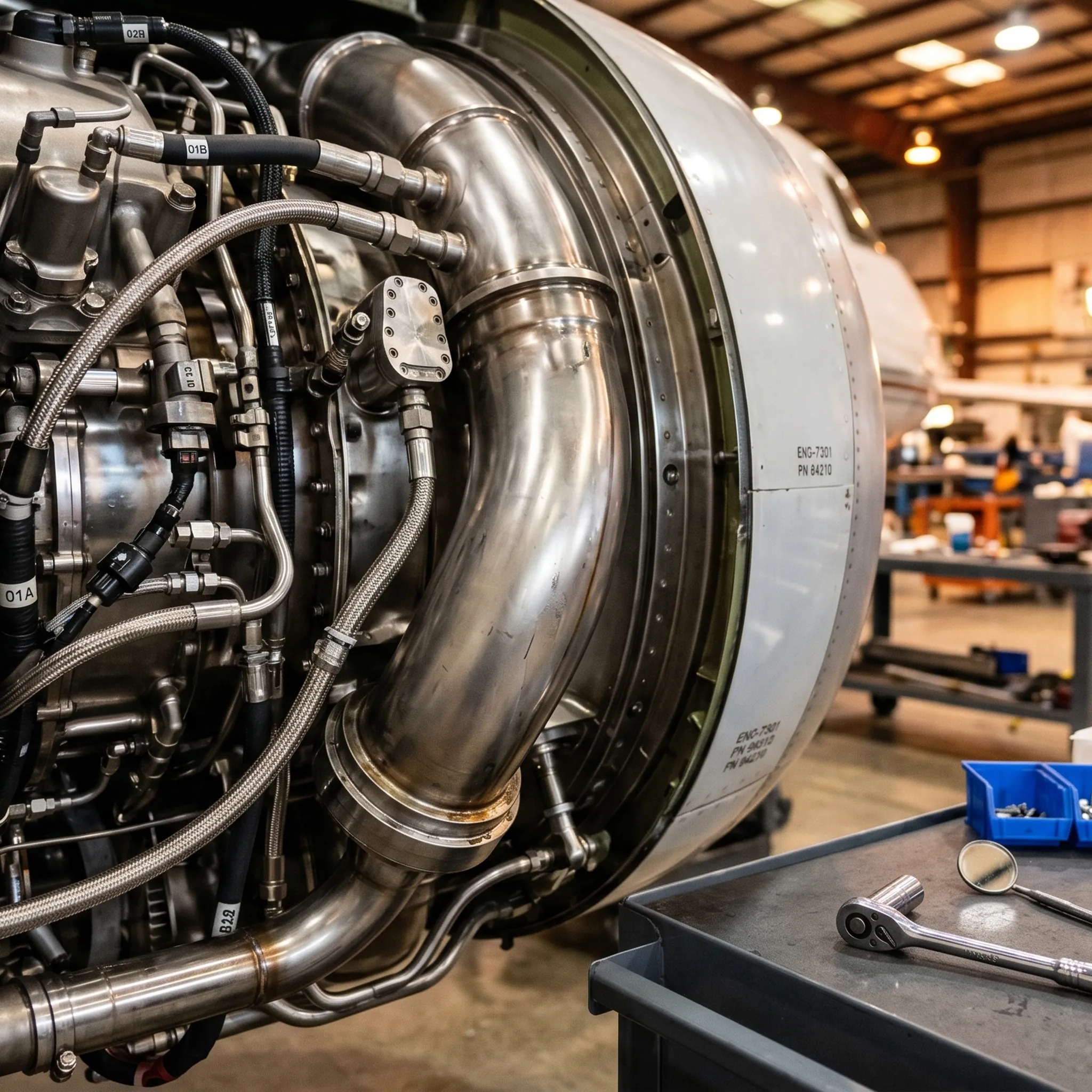
Most private jet owners are familiar with routine maintenance: line checks, A-checks, engine inspections. A C-check is a different animal entirely. Think of it as the aircraft equivalent of a full structural medical examination. Every major system gets opened, inspected, tested, and either serviced or replaced. The airframe itself gets scrutinized for fatigue, corrosion, and wear that wouldn’t show up in any routine inspection.
For the Falcon 7X specifically, this process is particularly complex. The aircraft uses a fly-by-wire flight control system, the first business jet to do so, which means the maintenance team needs specialized training and tooling just to access and evaluate systems that don’t exist on older aircraft. Layer in three Pratt and Whitney Canada PW307A engines in that distinctive trijet configuration, plus the advanced EASy II flight deck, and you have a maintenance event that demands a highly trained team with manufacturer-approved capability.
The time involved? Plan for somewhere between four and eight weeks of downtime depending on what the inspection uncovers. That’s not a small consideration if your Falcon 7X is a working asset.
The Southern Hemisphere Problem, and Why It Matters
Until now, operators in Australia, New Zealand, and the broader Australasia region faced a difficult choice when C-check time arrived. Send the aircraft to an approved facility in Europe, typically France given Dassault’s roots, or route it through North America. Either way, you’re looking at significant ferry flight costs, extended out-of-service time, and the logistical headache of managing an aircraft on the other side of the planet.
For an aircraft with a 5,950 nautical mile range, the irony isn’t lost on anyone. The Falcon 7X can fly Sydney to Singapore or Sydney to Tokyo nonstop. But routing it to Europe or North America for maintenance still adds cost and complexity that operators in the region have quietly absorbed for years.
The Australasian private aviation market has grown substantially over the past decade. More Falcon 7X and ultra-long-range aircraft are based in the region than ever before, which made the absence of local heavy maintenance capability an increasingly visible gap.
What ExecuJet’s Investment Actually Means
ExecuJet MRO Services has invested in both specialized tooling and dedicated training to gain the capability to perform C-checks on the Falcon 7X at their Sydney facility. This isn’t a minor upgrade. Tooling for a fly-by-wire business jet is expensive, purpose-built, and requires ongoing calibration. The training investment means technicians who understand the aircraft’s unique systems deeply enough to sign off on work that keeps the airworthiness certificate valid.
For regional operators, the practical implications are real and immediate:
- Reduced ferry costs: No transatlantic or transpacific positioning flights required for major maintenance events
- Shorter downtime: Eliminating transit time from the maintenance window can recover a week or more of aircraft availability
- Local oversight: Owners and their technical representatives can visit the aircraft during the check without international travel
- Regional expertise growth: A skilled MRO team with heavy maintenance capability attracts additional investment and talent to the region
- Resale value protection: Documented maintenance by an approved facility keeps the aircraft’s records clean for future buyers, wherever they’re based

Understanding the Falcon 7X Lifecycle
The Falcon 7X entered service in 2007, which means many of the original fleet are now on their second or third C-check cycle. It’s a mature platform with a strong service record and a loyal owner base, but that maturity also means the maintenance cadence is a well-understood reality rather than a future concern.
Here’s how the major inspection intervals stack up across a typical ownership period:
| Inspection Type | Approximate Interval | Typical Duration |
|---|---|---|
| A-Check | Every 600 flight hours | 1-3 days |
| B-Check | Every 12-18 months | 1-2 weeks |
| C-Check | Every 5-6 years | 4-8 weeks |
The C-check doesn’t just restore the aircraft to airworthiness. Done properly, it extends the effective service life and often surfaces modifications or service bulletin compliance items that bring the aircraft closer to current standards. For a jet that retains strong market value, a recent C-check is a genuine selling point. Buyers and their technical advisors look for it.
Reading the Broader Signal
This expansion tells you something about where the private aviation market is heading in the Southern Hemisphere. MRO providers don’t make these investments speculatively. ExecuJet is responding to demand that already exists and anticipating demand that’s coming. The Australasian ultra-long-range market is mature enough now to justify serious infrastructure.
For current Falcon 7X owners in the region, the timing is genuinely good news. For operators considering an ultra-long-range aircraft based in Australia or New Zealand, it removes one of the practical objections that has historically complicated the ownership calculus.

The Falcon 7X has always been a remarkable aircraft. Dassault built something that still competes with jets developed a decade later. Keeping one in the air requires care proportionate to its capability, and now that care is available without a hemisphere-crossing ferry flight. For owners who’ve been watching the C-check clock, that’s a straightforward win.