
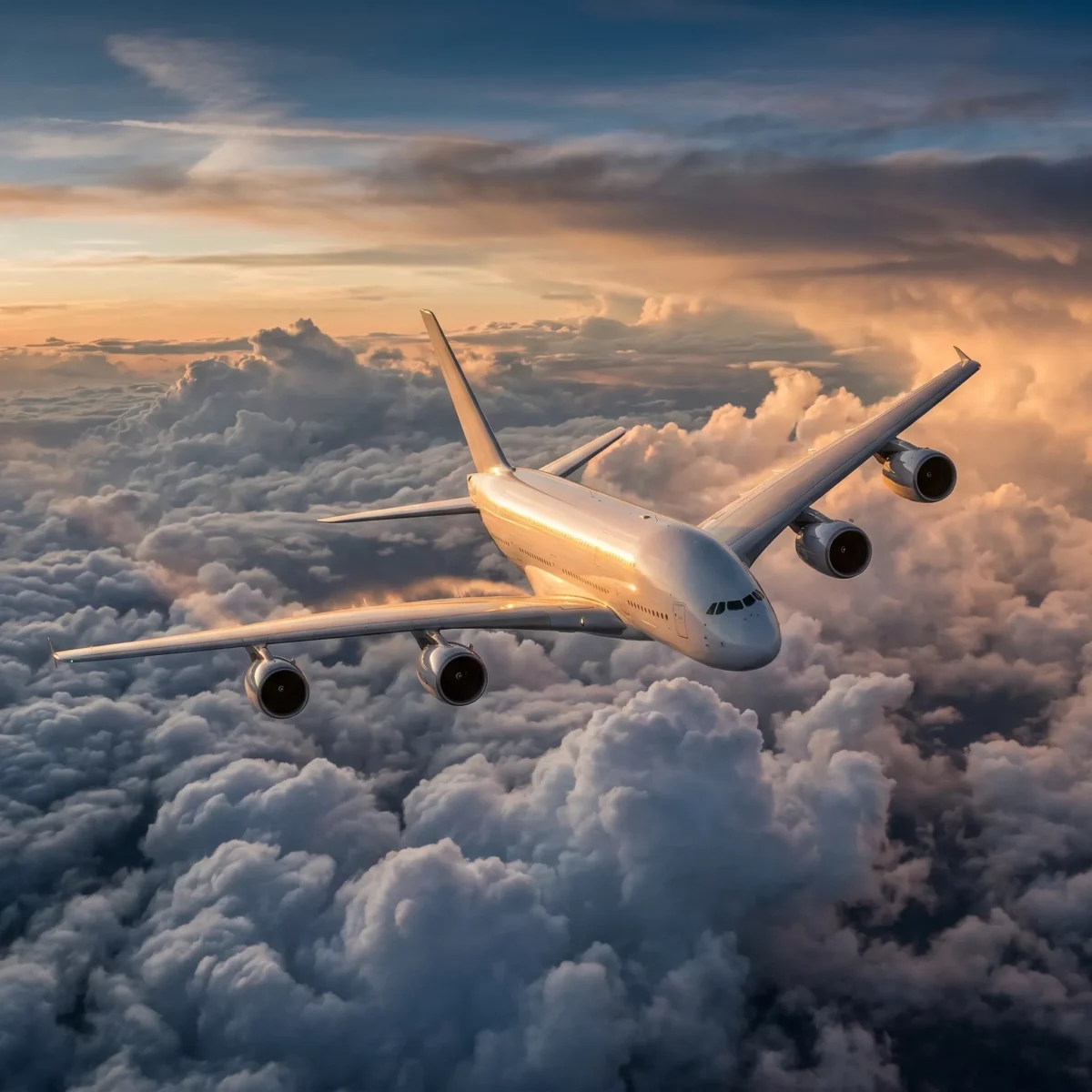
When a Gulfstream G650 is no longer enough to move the needle, the math of global touring moves into the realm of wide-body logistics. That is precisely the territory a viral aviation rumor surrounding Bad Bunny has forced serious industry observers to think through — not because the specific claim holds up under scrutiny, but because the underlying question it raises is entirely legitimate. What would it actually look like if a touring artist at global scale chartered a full Airbus A380 for personnel movement? And is it even operationally possible?
The short answer: it’s complicated, it’s expensive, and the Qantas attribution that spread across social media almost certainly didn’t happen the way it was described. But the logistics exercise it invites is genuinely worth working through, because the scale problem it attempts to solve is real.
The A380 in Context
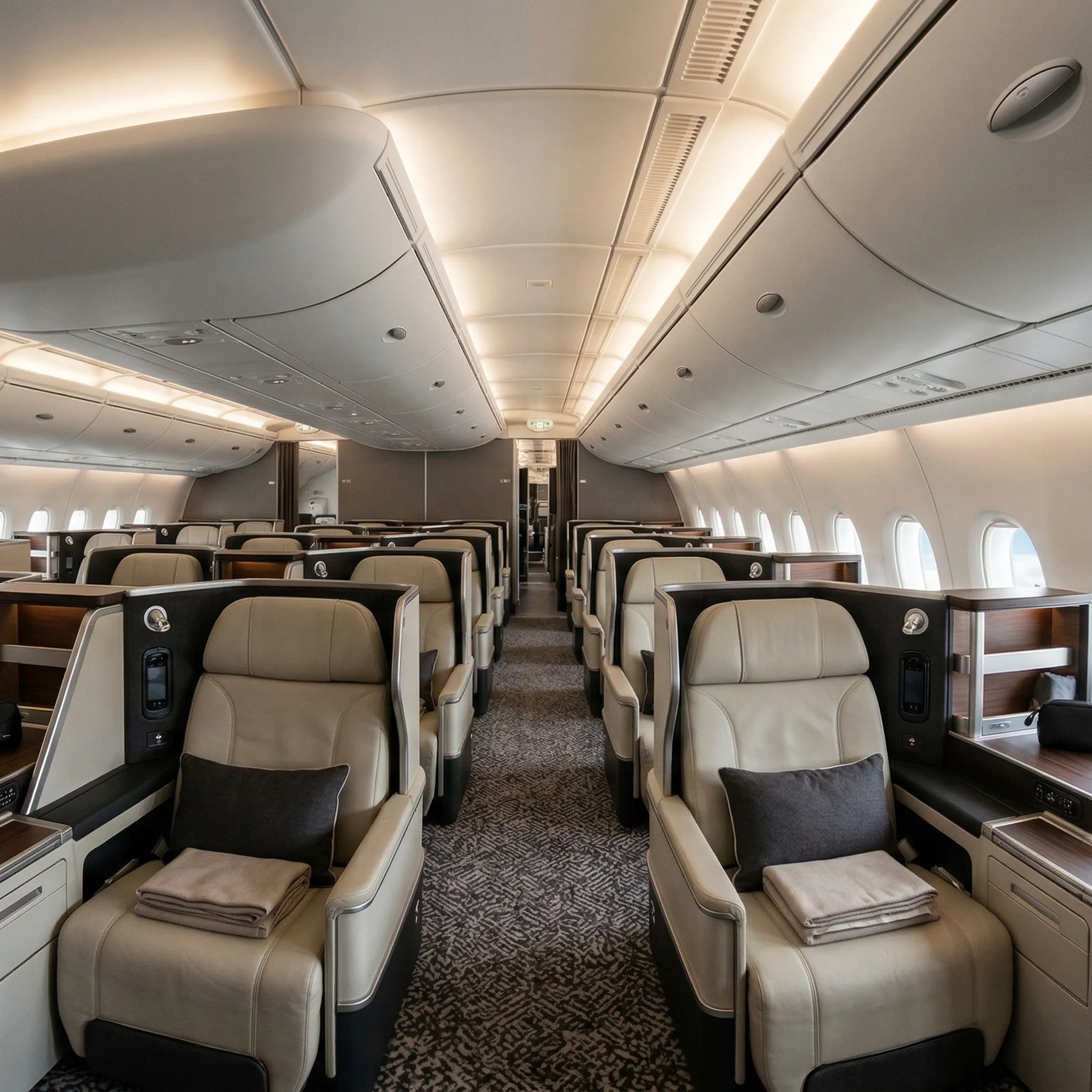
Let’s put the Airbus A380 in perspective first. This aircraft carries up to 853 passengers in a high-density configuration. Its wingspan stretches 261 feet. Empty, it weighs over 600,000 pounds. Flag carriers like Qantas operate it on ultra-long-haul routes — Sydney to Los Angeles, Sydney to London — precisely because nothing else comes close to its passenger capacity at intercontinental range.
When artists like Taylor Swift or Beyoncé tour at scale, they typically travel with a core team of 20 to 40 people on a wide-body charter, often a Boeing 767 or Airbus A330, while production equipment moves separately via cargo. The rumor surrounding Bad Bunny proposed something far more ambitious: consolidating the entire human side of the operation onto a single A380. One aircraft. One manifest. One personnel movement.
The logic, once you understand touring logistics, holds firmly for the crew layer. A major world tour doesn’t move lightly on the human side: there’s wardrobe, personal security details, stylists, managers, handlers, and a dedicated media crew. Consolidating all of that onto a single aircraft eliminates coordination headaches, delays, and exposure to schedule disruptions that multiply across separate charters. What an A380 cannot replace, however, are the dedicated cargo freighters — typically Boeing 747-8Fs with nose-loading capability — required to transport lighting rigs, staging infrastructure, and large production components. Those move separately regardless of how large the passenger aircraft becomes. The more accurate framing for any hypothetical wide-body personnel charter is personnel and essential support consolidation, not full production consolidation.
Why the Qantas Attribution Doesn’t Hold Up
Here is where the rumor runs into structural reality. Qantas operates a fleet of just ten A380s — a small, meticulously managed group of aircraft that form the backbone of the airline’s most commercially critical long-haul routes. Pulling one from scheduled service for an ad-hoc private charter isn’t simply a matter of price. It means displacing hundreds of confirmed revenue passengers on high-yield routes, renegotiating slot commitments at constrained airports, and navigating crew scheduling obligations that commercial carriers plan months in advance. Aviation insiders will tell you plainly: Qantas’s commercial division does not support this kind of one-off wide-body diversion for private clients, regardless of the fee involved.
That doesn’t mean A380 charters are impossible. It means they don’t come from flag carriers operating the aircraft as their core fleet asset. The operators genuinely capable of supporting a full wide-body charter at this scale are typically specialist carriers or aircraft lessor-backed operations with purpose-dedicated charter fleets — not airlines for whom removing an A380 from rotation creates cascading schedule failures. The Bad Bunny story, as it circulated, conflated the ambition of the logistics concept with a specific airline that couldn’t plausibly execute it. Treat it as a useful thought experiment rather than a confirmed transaction.
What a Legitimate Wide-Body Charter Actually Involves
Setting the Qantas question aside, a genuine full wide-body charter at A380 scale is not something arranged with a credit card and a phone call. It requires direct engagement with a carrier’s or lessor’s commercial division, months of advance coordination, and a significant financial commitment. Industry estimates for full A380-class charters run anywhere from $1.5 million to $3 million per flight, depending on routing, crew requirements, and fuel costs. On a multi-leg international tour, that number compounds quickly.
The organizational sophistication required to execute something like this rivals small airline operations. Slot restrictions, crew scheduling, maintenance windows, and routing approvals all have to align simultaneously — across multiple jurisdictions, in many cases. The fact that the concept is even discussed seriously at the touring level signals that the logistical teams around today’s top-grossing artists have matured considerably beyond what most people assume.
Where Private Jets Fit Into This Picture
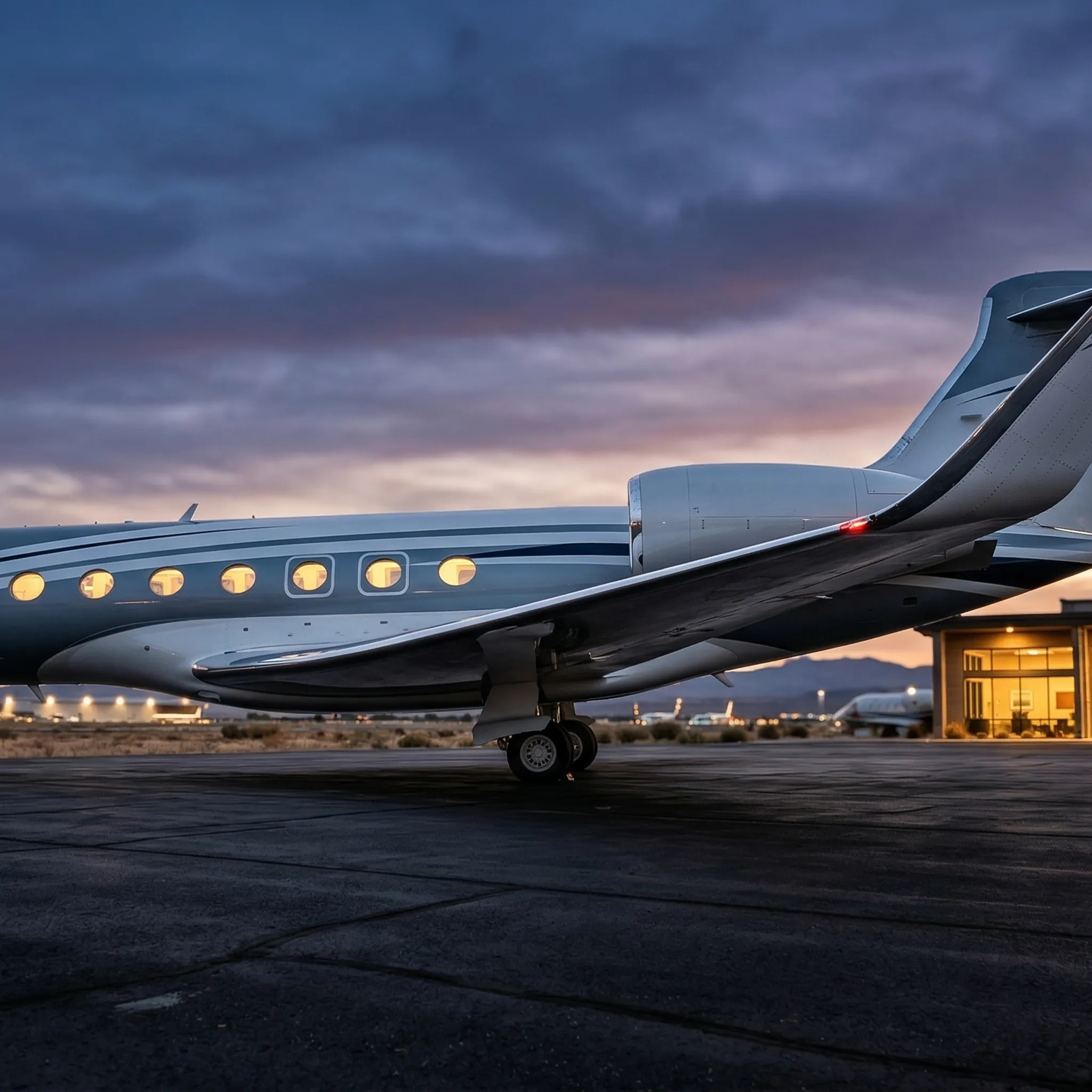
None of this replaces traditional private aviation at the top of the touring hierarchy. An artist like Bad Bunny almost certainly moves between select venues on a proper private jet, likely something in the large cabin or ultra-long-range category. The reason is structural: as a Code F aircraft, the A380 is restricted to major international hubs equipped with specific runway widths, taxiway clearances, and gate infrastructure its 261-foot wingspan demands — airports like JFK, LAX, and London Heathrow. It cannot reposition to a regional airport in 40 minutes, and it cannot serve the secondary and tertiary markets that populate the middle weeks of any major tour. A Bombardier Global 7500 or comparable ultra-long-range jet provides precisely what an A380 cannot: access to thousands of smaller airfields, faster turnarounds, and genuine on-demand flexibility at the venue level.
What a wide-body charter provides is a different kind of value — functioning as a personnel logistics platform for hub-to-hub movements rather than a luxury transport for venue-to-venue flexibility. Think of it as relocating the human infrastructure of a small city from one continent to another in a single, controlled operation. The A380’s cargo hold carries over 6,100 cubic feet (175 cubic meters) of freight, well-suited for wardrobe, personal effects, and essential support materials. Large staging components and production rigs, however, remain the domain of dedicated freighters with the nose-loading capability and specialized cargo terminal access that the A380’s passenger configuration cannot replicate.
The Broader Trend in Celebrity Aviation
The Bad Bunny rumor, confirmed or not, fits into a broader pattern emerging among artists operating at global scale. The world’s top-grossing tours now generate hundreds of millions of dollars in revenue. At that level, travel efficiency directly affects the bottom line. A missed connection, a delayed charter, or a crew that’s been awake for 22 hours doesn’t just cause inconvenience. It affects the performance, the production quality, and ultimately the fan experience.
Artists at this level increasingly treat aviation the same way serious corporations treat business aviation: as a strategic tool, not a lifestyle indulgence. The math changes when a single tour date can generate $10 million or more in revenue. Spending $2 million to guarantee that the entire personnel operation arrives on time, intact, and rested starts looking like the conservative choice — and a straightforwardly rational one.
We’ve seen the same logic applied in premium sports. Formula 1 teams charter dedicated freighters for equipment. NBA franchises maintain relationships with large-cabin charter operators for the playoffs. The underlying principle is identical: at sufficient scale, consolidation beats fragmentation — even when that consolidation applies only to the human element of the operation.
What This Means for the Charter Market
For operators in the business aviation space, the A380 conversation — however it originated — is a useful reminder that the market for large-scale charter logistics remains wide open. Most charter brokers focus on the light, midsize, and heavy cabin segments, where demand is predictable and transactions are cleaner. True wide-body and ultra-large charter is a specialty niche that requires relationships with commercial carriers and aircraft lessors, not just traditional charter operators.
Companies like Chapman Freeborn and Air Charter Service have built businesses in exactly this space, arranging full aircraft charters for sports teams, government missions, and global entertainment productions. Their expertise sits at the intersection of commercial aviation logistics and the bespoke requirements of high-profile clients — a fundamentally different skill set than placing a client in a Gulfstream G700, and one that is becoming considerably more valuable.
Whether Bad Bunny’s team actually executed a wide-body charter of this kind, or whether the story was embellished in transit across aviation social media, the hypothetical holds. At the very top of the live entertainment industry, the bar for what constitutes serious tour aviation is moving. When the calculus demands it, the world’s largest passenger jets are mechanisms for personnel logistics at global scale — not just status symbols. The constraint isn’t imagination or budget. It’s knowing which operators can actually deliver, understanding what Code F airport access genuinely limits, and being clear-eyed about exactly what a passenger jet, however large, can and cannot carry.